
Latest News
"TVK's Vijay Calls for NEET Abolishment and State Control Over Education Amid Delhi Protests"
22, Jul 26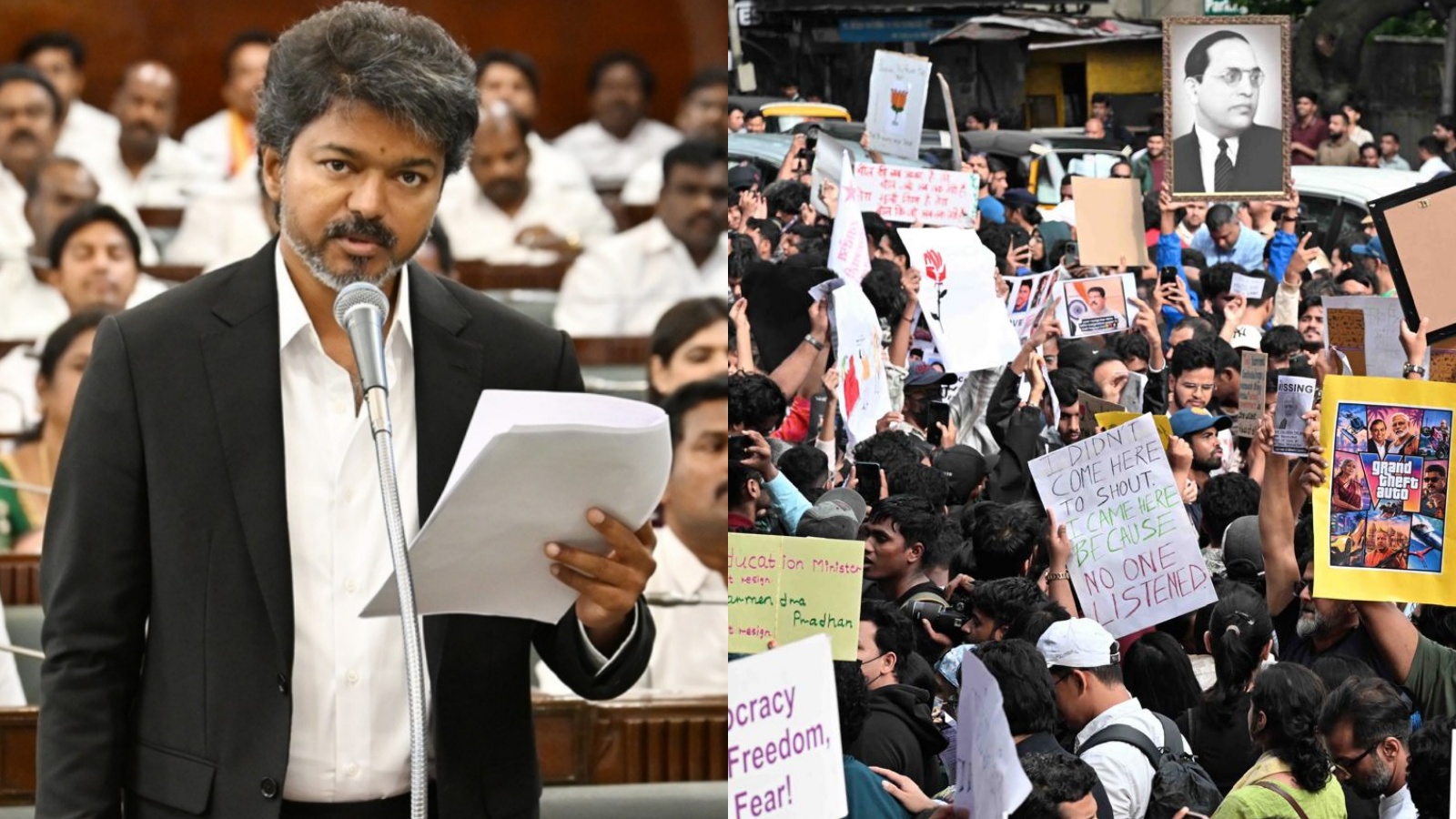
Tamil Nadu's DMK Joins Calls to Abolish NEET Amid Protests in New Delhi
As nationwide protests against irregularities in the National Eligibility cum Entrance Test (NEET) gained momentum in New Delhi, Tamil Nadu's political landscape witnessed a surge in demands to abolish the centralized medical entrance exam. The Tamilaga Vettri Kazhagam (TVK), led by Chief Minister Vijay, and the Dravida Muetra Kazhagam (DMK) both reiterated their stance against NEET, emphasizing the need for its complete abolition.
DMK's Long-standing Opposition to NEET
Former Chief Minister and DMK leader M K Stalin reaffirmed the party's consistent stand against NEET, highlighting the structural flaws that make the exam susceptible to irregularities. Stalin emphasized that the ultimate goal of the protests should be the complete eradication of NEET, asserting that this is the only viable solution to the recurring controversies surrounding the examination.
Protests Extend Beyond Examination Irregularities
The demonstrations in New Delhi evolved into a broader discourse on educational governance, transparency, and accountability, with various stakeholders advocating for a revamp of the national entrance examination system. Student groups, Opposition leaders, and civil society organizations accentuated that the frequent controversies have eroded public trust in the examination process.
TVK Proposes Interim Solution
In a bid to address the ongoing challenges posed by NEET, TVK proposed the transfer of education powers to the State List or the creation of a Special Concurrent List as an interim measure until a permanent constitutional solution is reached. The party underscored the need for a fundamental restructuring of India's federal distribution of powers in the education sector to effectively tackle the issues surrounding national entrance exams.
TVK's Political Standpoint
While aligning with the demand for abolishing NEET, TVK differentiated itself from the Union government and its political rival, DMK, by emphasizing the need for substantive constitutional changes rather than mere administrative reforms. The party accused the DMK of engaging in "fraudulent politics" and cautioned against politicizing the issue solely for electoral gains.
Continued Political Tensions
The statement by TVK concluded with a direct critique of the DMK, accusing the party of appropriating the efforts of others while attempting to target TVK politically. It warned that any further attacks on TVK would lead to scrutiny of the DMK's history of political deceit, hinting at escalating tensions between the two prominent political entities in Tamil Nadu.
Weather Update
TRENDING STORIES
Copyright © 2026 Samachartimeshindi.com News24/7 All Rights Reserved. Designed By Websbird Technologies