
Latest News
"Rafah Crossing Reopens: Palestinians Granted Access to Gaza, Patients Evacuated to Egypt in Hopeful Move for Humanitarian Aid"
03, Feb 26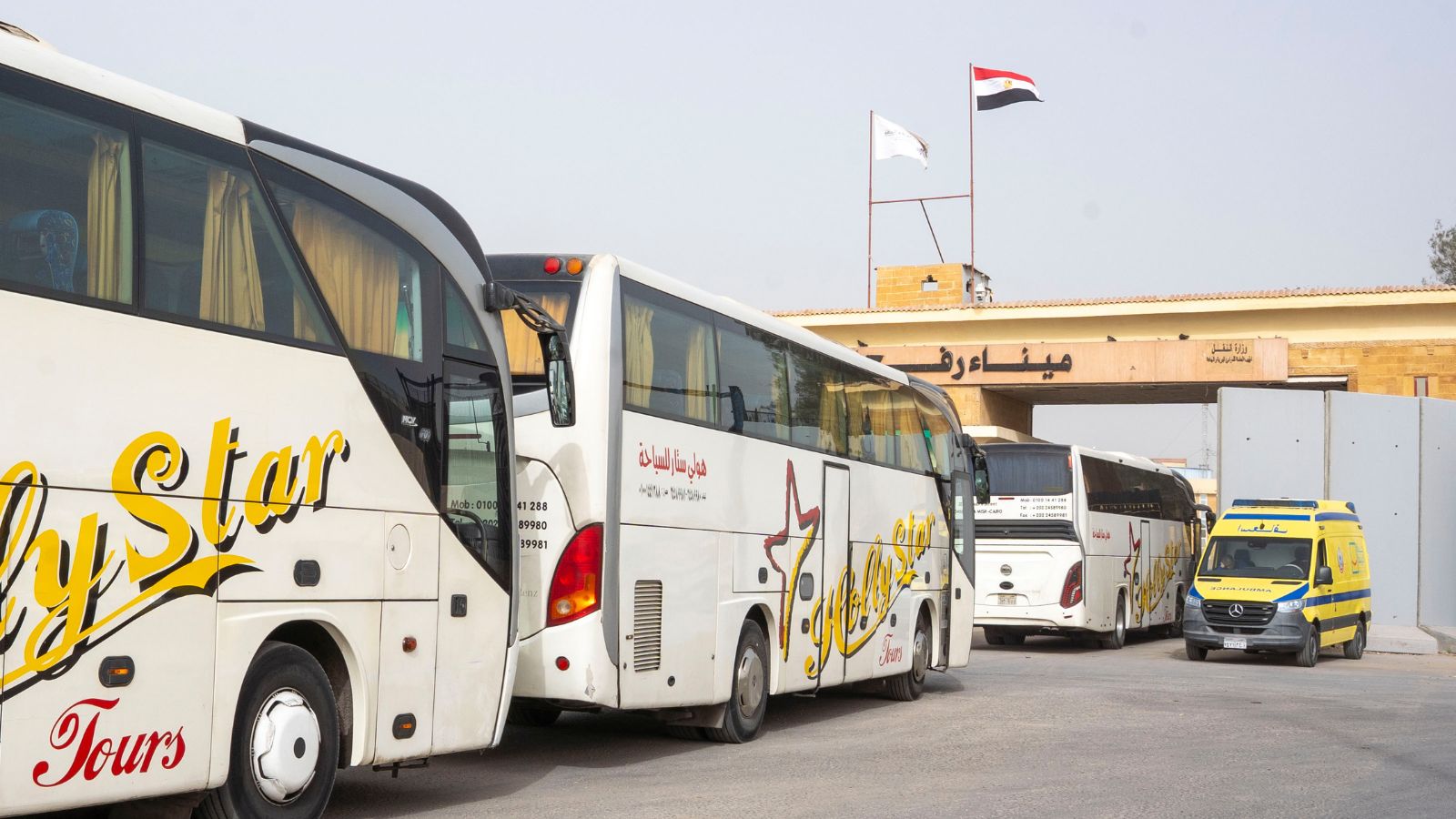
The reopening of the Rafah border crossing marked a significant yet symbolic step in the Israel-Hamas ceasefire, as only a limited number of individuals were permitted to travel, and goods were not allowed to pass through. A dozen Palestinian returnees entered Gaza from Egypt late Monday after facing delays following the long-awaited reopening of the crossing.
Despite expectations, the number of individuals allowed to cross fell below the anticipated 50 people in each direction. Approximately 20,000 Palestinians, including children and adults in need of medical care, are hopeful to depart the devastated territory through the crossing, as stated by Gaza health officials.
The reopening of the Rafah crossing, which had been closed since Israeli troops seized it in May 2024, is expected to gradually increase the number of travelers if the system proves successful. Israel and Egypt are set to vet individuals for entry and exit, with ambulances lining up for hours at the border to transport patients into Egypt.
As the conflict continues in Gaza, with reports of ongoing violence, thousands of Palestinians remain in need of urgent medical assistance. The reopening of the crossing offers a glimmer of hope for those seeking treatment outside the territory, following months of restricted access due to the conflict.
The United Nations and other international bodies have called for increased support for Gaza's population, urging countries to accept more patients requiring medical treatment. With the Rafah crossing now operational, families eagerly await the return of their loved ones who were forced to flee during the war.
Supervised by European Union border patrol agents with a Palestinian presence, the Rafah crossing's reopening signifies progress in the ceasefire agreement. The move is seen as a pivotal step in the US-brokered truce, which aims to bring stability to the region after years of conflict between Israel and Hamas.
As the Rafah crossing facilitates the movement of individuals in and out of Gaza, it stands as a beacon of hope for those affected by the long-standing conflict. With the ceasefire in place, efforts are underway to address the humanitarian crisis and pave the way for a more peaceful future in the region.
Weather Update
TRENDING STORIES
Copyright © 2026 Samachartimeshindi.com News24/7 All Rights Reserved. Designed By Websbird Technologies