
Latest News
"Legal Battle Threatens Bihar Government's Vision for Renowned Patna Library"
13, Mar 26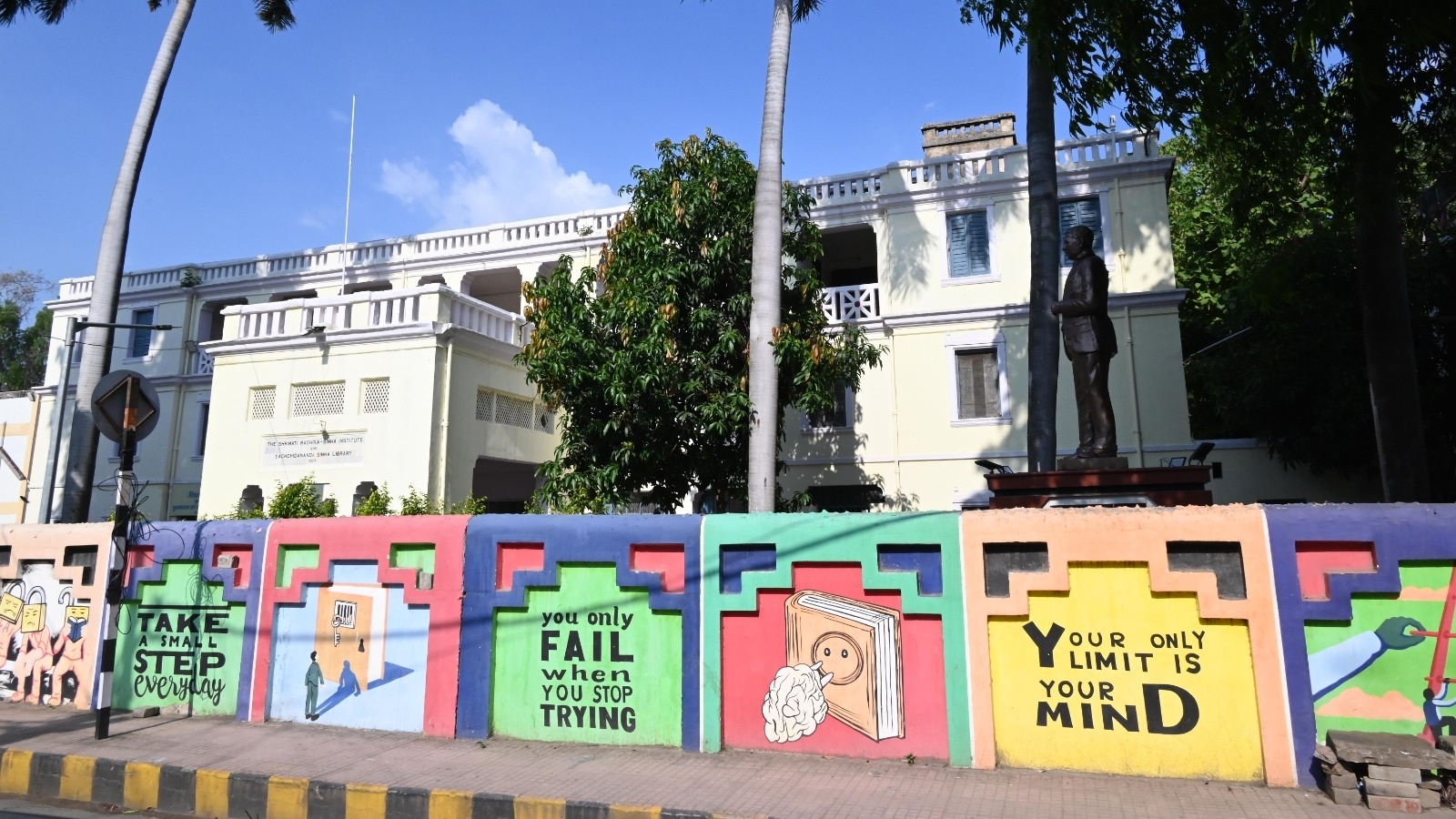
In a significant ruling on March 10, the Supreme Court invalidated the Shrimati Radhika Sinha Institute and Sachchidananda Sinha Library (Requisition & Management) Act, 2015, deeming it unconstitutional. This decision has halted the ambitious revival plans for Patna's renowned Sinha Library, dealing a blow to the state government's efforts to acquire the historic institution back in 2015.
As part of the revival strategy, the government had undertaken the digitization of a vast collection of books housed in the library. However, the Supreme Court's ruling has now restored the management and administration of the library to the Shrimati Radhika Sinha Institute and Sachchidananda Sinha Library Trust, which had contested the state's acquisition of the library.
Justices Vikram Nath and Sandeep Mehta, in their judgment, criticized the law as "manifestly arbitrary" and a violation of Article 14 of the Constitution. The court highlighted that the state government had failed to substantiate allegations of mismanagement or provide valid reasons for acquiring the library through the Act.
Founded by Sachchidananda Sinha in 1924, the Sinha Library holds immense cultural and historical significance, having been inaugurated by Sir Henry Wheeler, the then Governor of Bihar and Orissa. The library has been graced by prominent figures of the freedom movement, including Mahatma Gandhi, Jawaharlal Nehru, Dr. Rajendra Prasad, and Acharya J.B. Kripalani.
Anjay Kumar, a senior official of the library, mentioned that a trustee would soon visit Patna to resume the library's operations. However, the Bihar government is contemplating its next steps following the Supreme Court's ruling, which has thrown a wrench into their plans for the iconic institution.
The library boasts a vast collection of over 3 lakh books, including 50,000 rare volumes. It houses complete editions of historic newspapers like Amrit Bazar Patrika and Harijan, pivotal to the freedom struggle. Additionally, it contains handwritten manuscripts in Urdu, Persian, and Sanskrit, along with British-era legal digests and court records.
The library, named after Radhika Sinha, the wife of Sachchidananda Sinha, pays tribute to one of Bihar's key architects of modernity. Sachchidananda Sinha served as the provisional president of the Constituent Assembly of India during its inaugural session in Delhi in 1946.
The Supreme Court's ruling has not only put a halt to the state government's acquisition of the historic Sinha Library but has also raised questions about the future course of action for this iconic institution. As stakeholders regroup and assess the situation, the fate of this cultural treasure hangs in the balance.
Weather Update
TRENDING STORIES
Copyright © 2026 Samachartimeshindi.com News24/7 All Rights Reserved. Designed By Websbird Technologies